Skip to case study
Selected work

MDes thesis · 2026

Designing with Mirrors

Helping designers reflect on how their own experiences and assumptions shape the decisions they make.
Role
Researcher + interaction designer
Focus
Positionality, reflection, facilitation
Project outcome
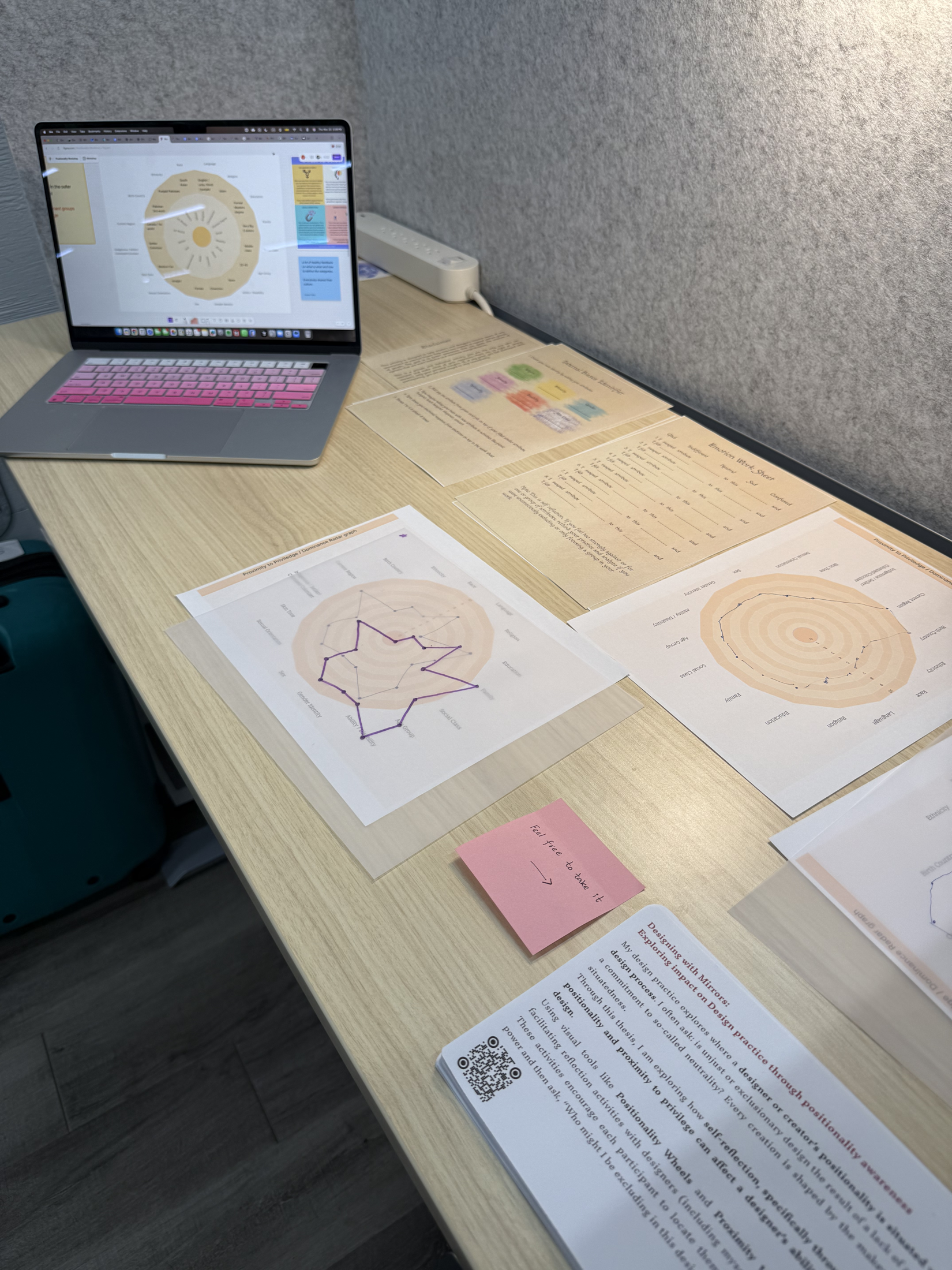
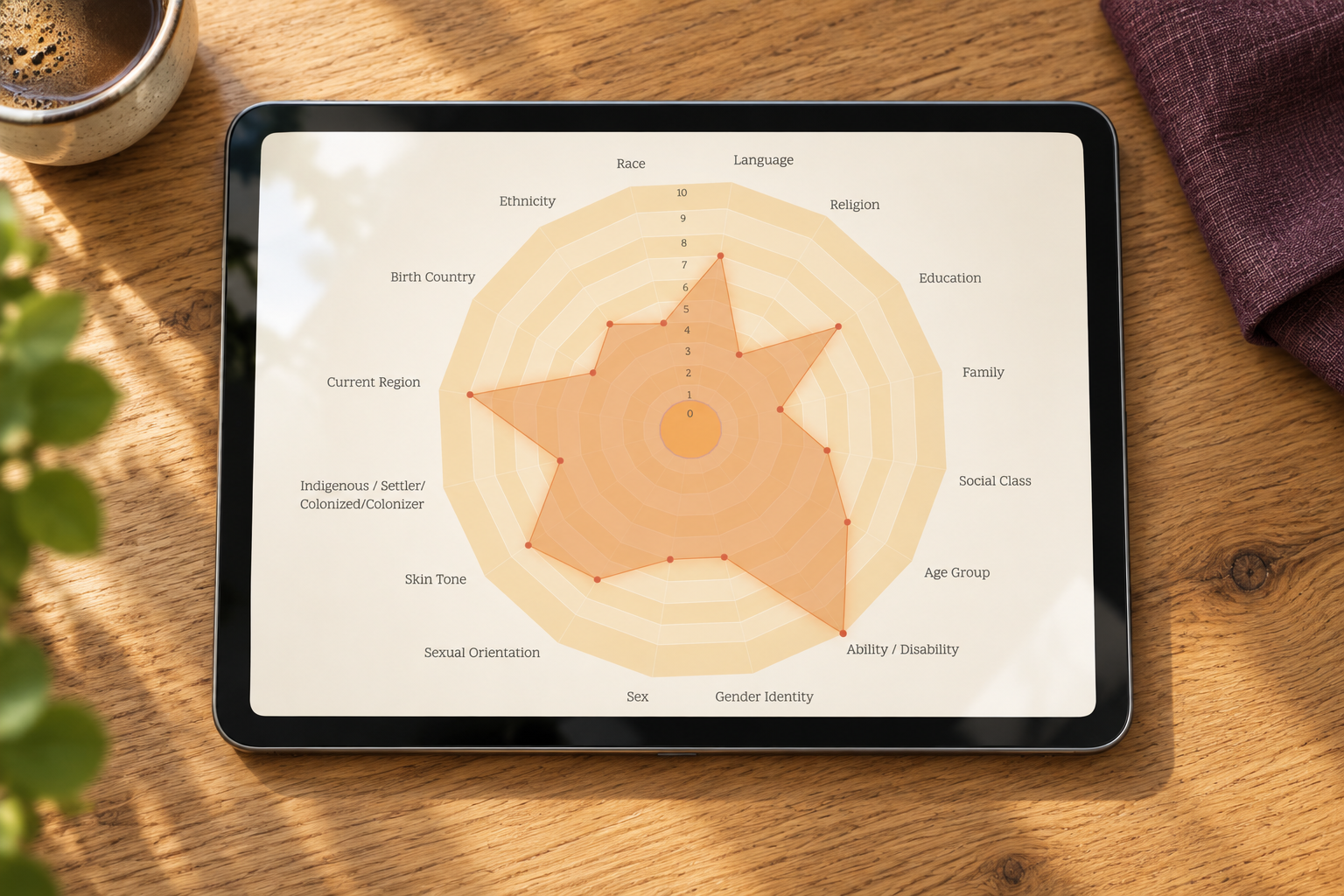
Workshop of Awareness · two visual reflection tools
Designing with Mirrors project presentation
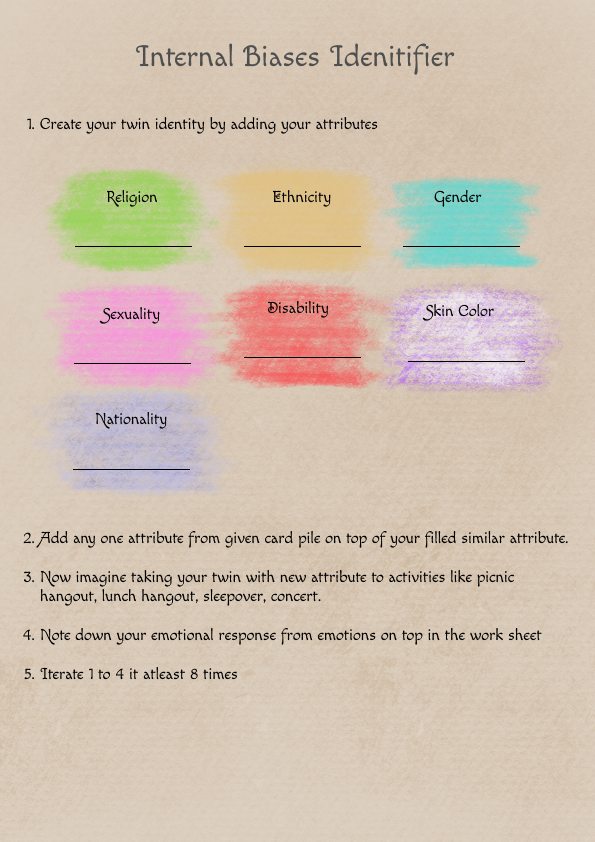
Internal Bias Identifier worksheet for constructing and changing a twin identity
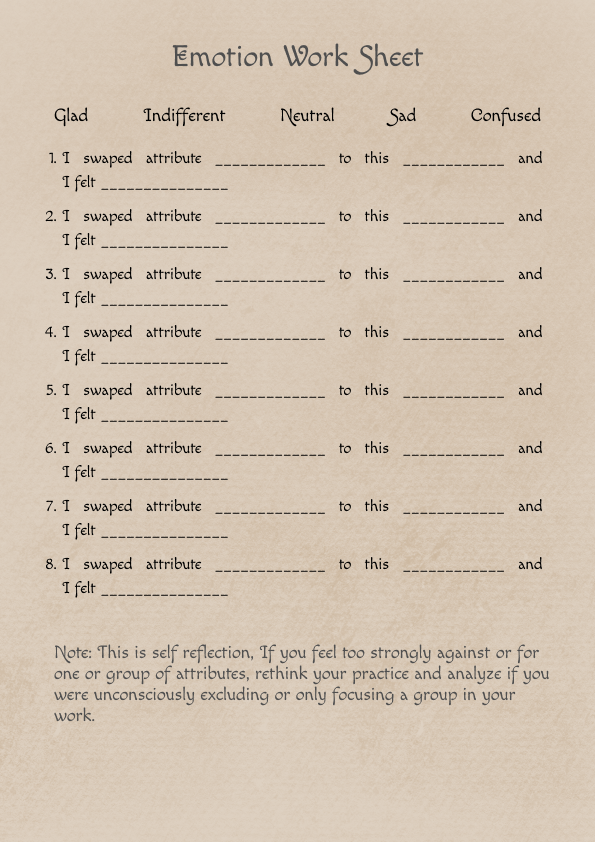
Emotion worksheet used to record responses after identity-attribute swaps

At a glance

The short version.

01

Challenge

Designers are treated as neutral even when their lived experience shapes who and what they notice.

02

My contribution

I designed, facilitated, and iterated two reflective interventions, then analyzed written participant reflections.

03

Outcome

The final workshop made positionality tangible without forcing disclosure, helping participants pause, question assumptions, and notice edge cases.

01 / The starting point

Understanding the problem.

User-centered methods ask designers to understand other people, but rarely ask designers to locate themselves. This research explored how visual reflection could make the designer's own assumptions, access, and structural position visible inside the design process.

practice-based inquiryqualitative researchworkshop facilitation
The experience I designed for
  1. Locate yourself

    Map the experiences you bring.

  2. Reflect

    Notice how they shape a decision.

  3. Reconsider

    Make room for another perspective.

02 / The first experiment

A provocative idea revealed an ethical boundary.

The Twin Experiment asked participants to create a parallel identity, swap one attribute using a card deck, imagine everyday situations through that changed identity, and record their emotional response.The activity surfaced discomfort, but offered no safe route for processing it. I treated that tension as research evidence and shifted from confrontation toward paced, consent-based reflection.

03 / The final intervention

Visualization made reflection concrete—and private.

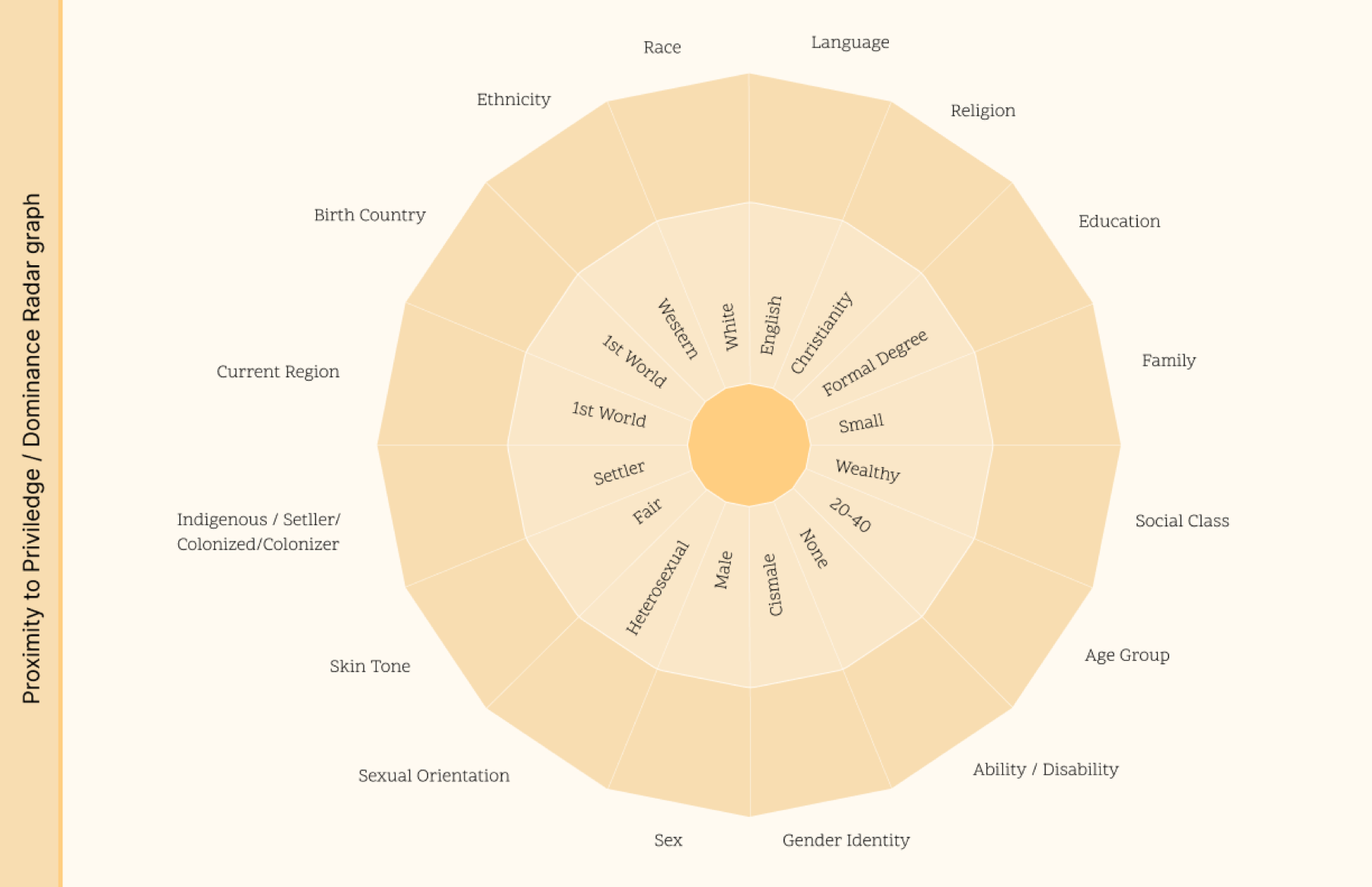
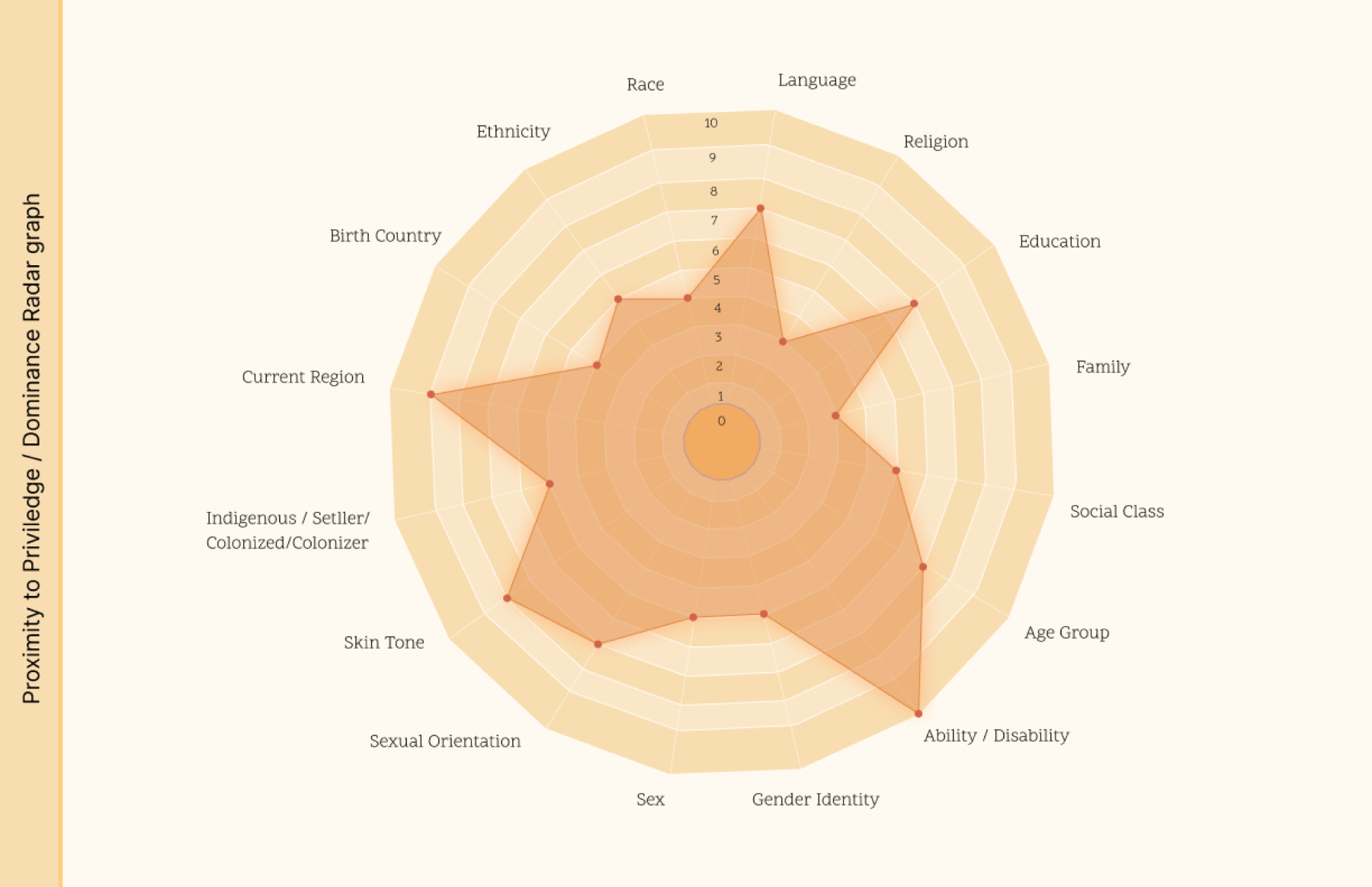
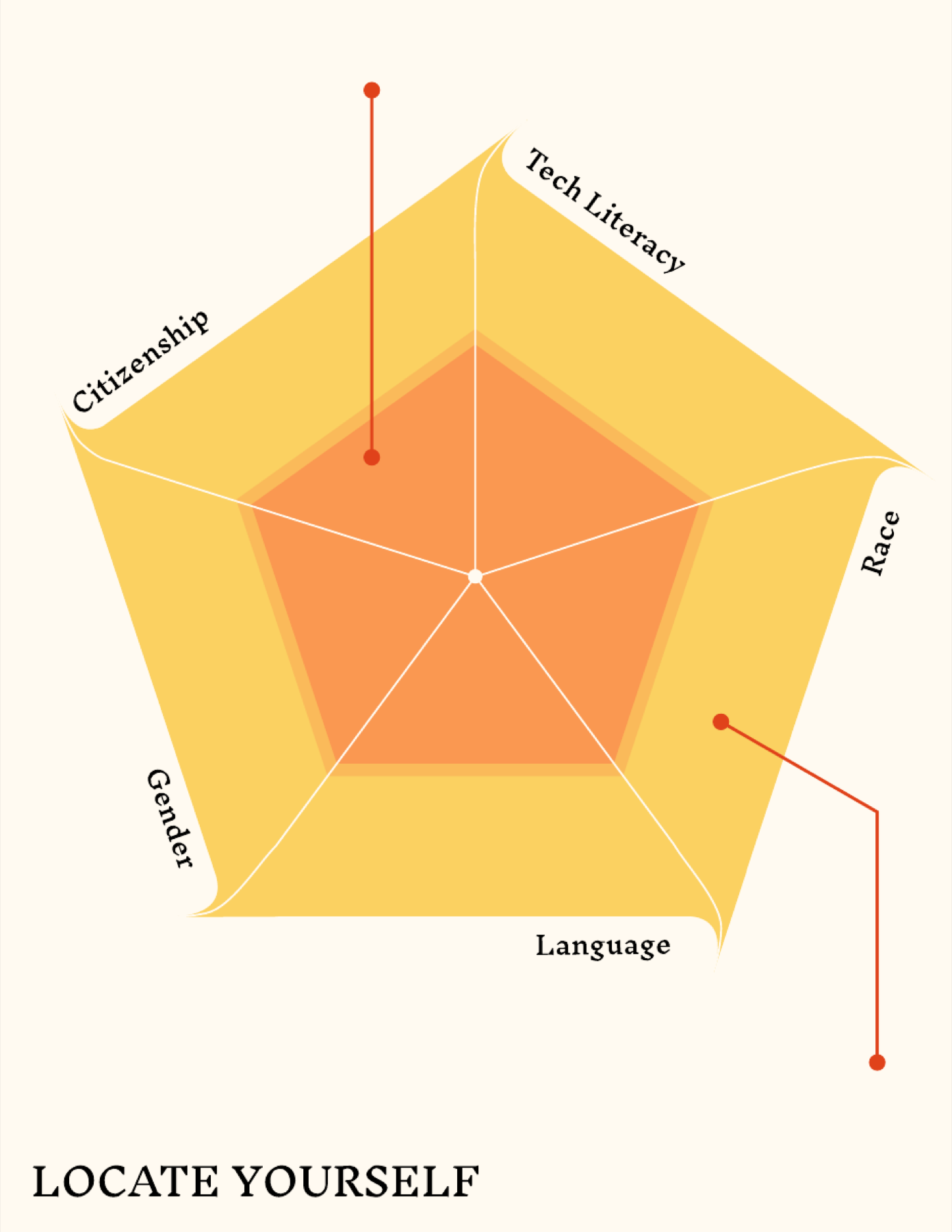
The Workshop of Awareness begins with a design prompt, then introduces a positionality wheel and a proximity-to-dominance radar.Transparent overlays support comparison without direct disclosure. The maps are approximations, not identity scores: their job is to help participants see relationships they might otherwise leave implicit.

Try the research / 3 minutes

Locate yourself—without turning identity into a score.

Choose one design decision you are making now. Approximate how close you feel to dominant norms in that context across five dimensions from an early thesis prototype.

No answer is submitted or saved. Skip anything you do not want to map.

Farther from the dominant normCloser

Pause before solving

What might your relative closeness in Language help you access—and what might your distance in Tech literacy help you notice?

How much did the map shift what you noticed?
Optional · this rates the prompt, not you.

04 / What the mirrors revealed

The result was a shift in attention, not a claim of transformation.

Written reflections suggested recognition of positionality and privilege, vulnerability without withdrawal, and stronger links between personal assumptions and excluded users.The study does not claim immediate or lasting behavior change. Its defensible outcome is smaller and useful: structured visual reflection created conditions for designers to pause and reconsider.

Keep exploring · 02

Fresh PrepBack to all projectsSay hello