Skip to case study
Selected work

Enterprise SaaS · 2024-now

Broadsight

Helping media-relations teams find priorities, track requests, and manage contacts in a busy workspace.
Role
Product designer
Focus
Enterprise UX, information architecture, design systems
Project outcome
25% user growth · approximately $50K quarterly revenue lift
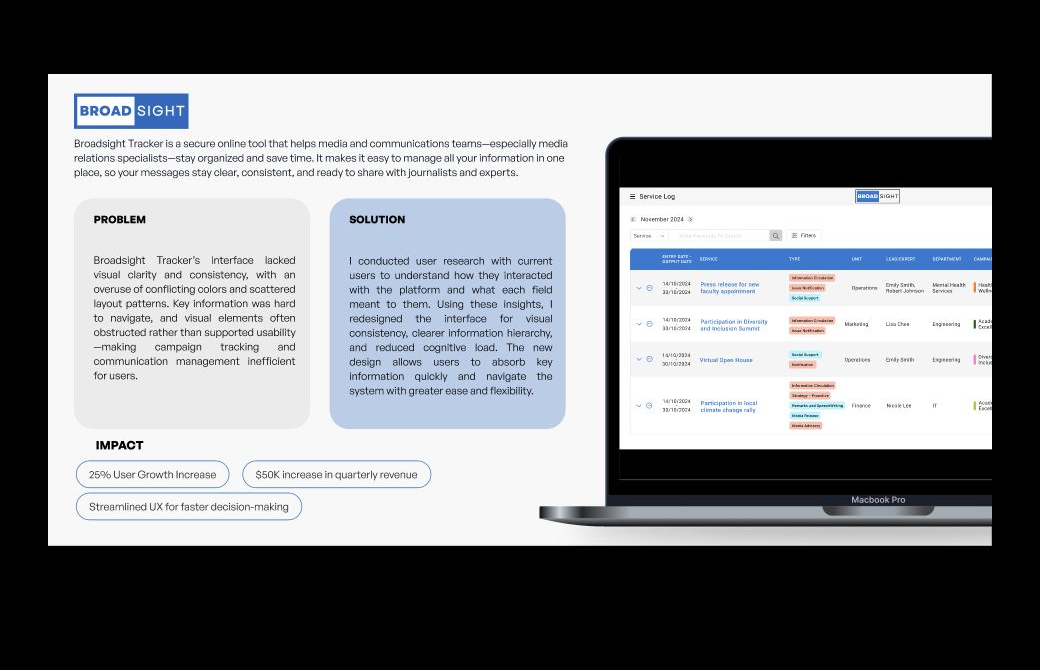
Broadsight project presentation
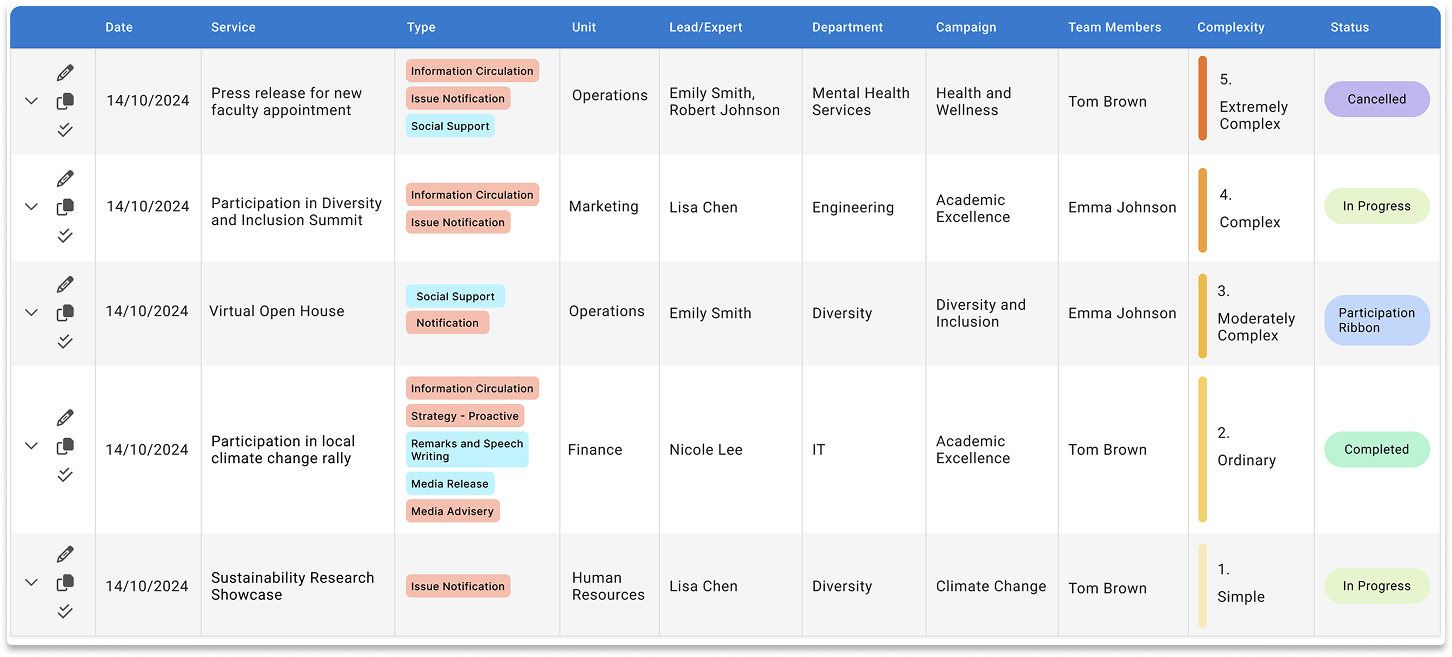
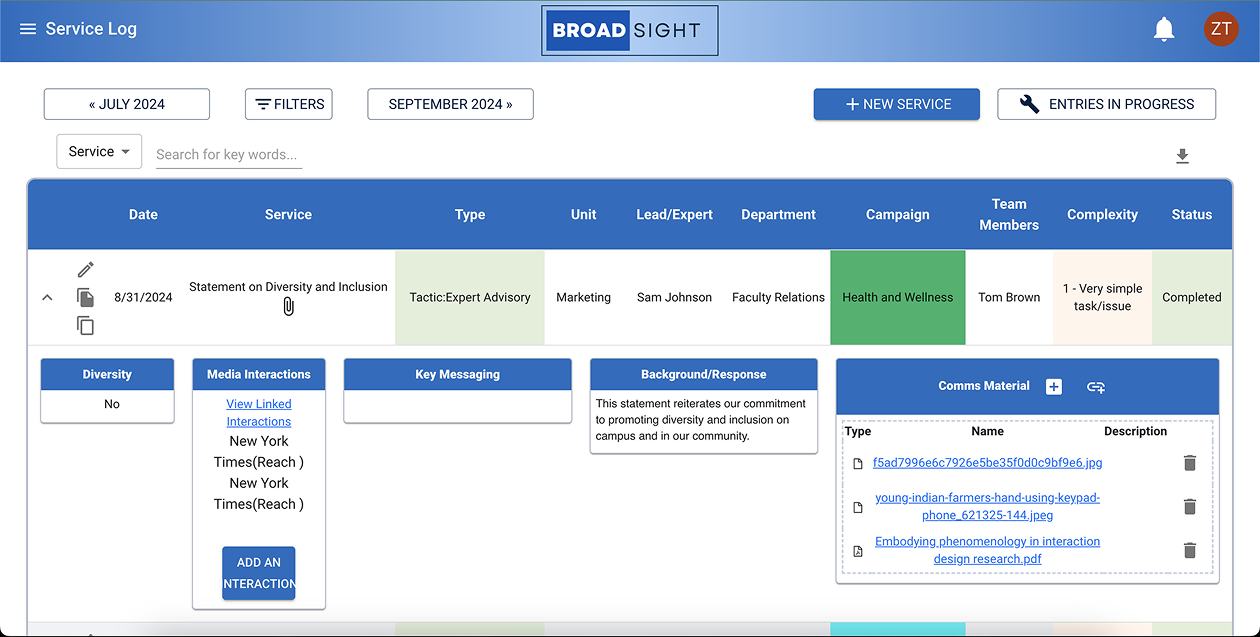
Earlier Broadsight table with dense rows, many competing colors, and expanded details
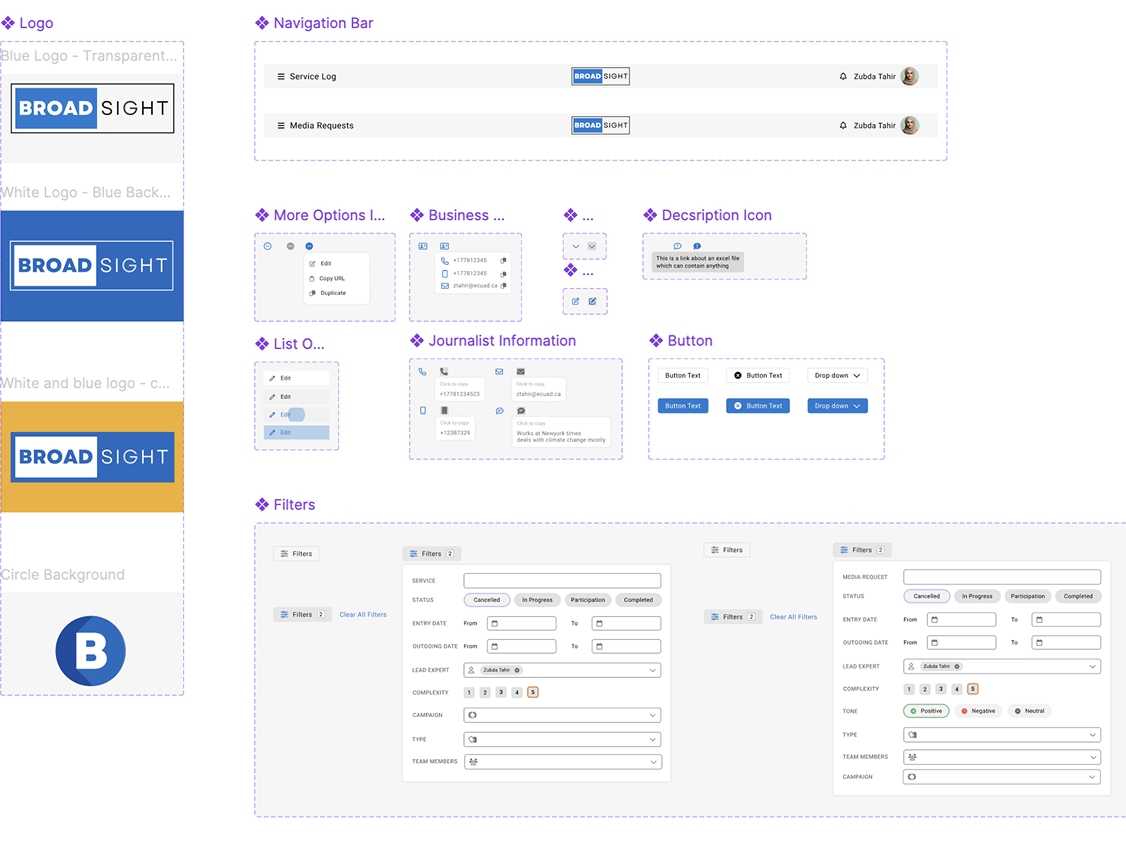
Broadsight design system with buttons, controls, type labels, status colors, and table components

At a glance

The short version.

01

Challenge

A visually inconsistent platform forced media-relations teams to decode dense tables before they could decide what needed attention.

02

My contribution

I interviewed current users, audited the product, reorganized its information model, and created reusable patterns across core workflows.

03

Outcome

A faster, more coherent product experience associated with 25% user growth and an approximately $50K quarterly revenue lift.
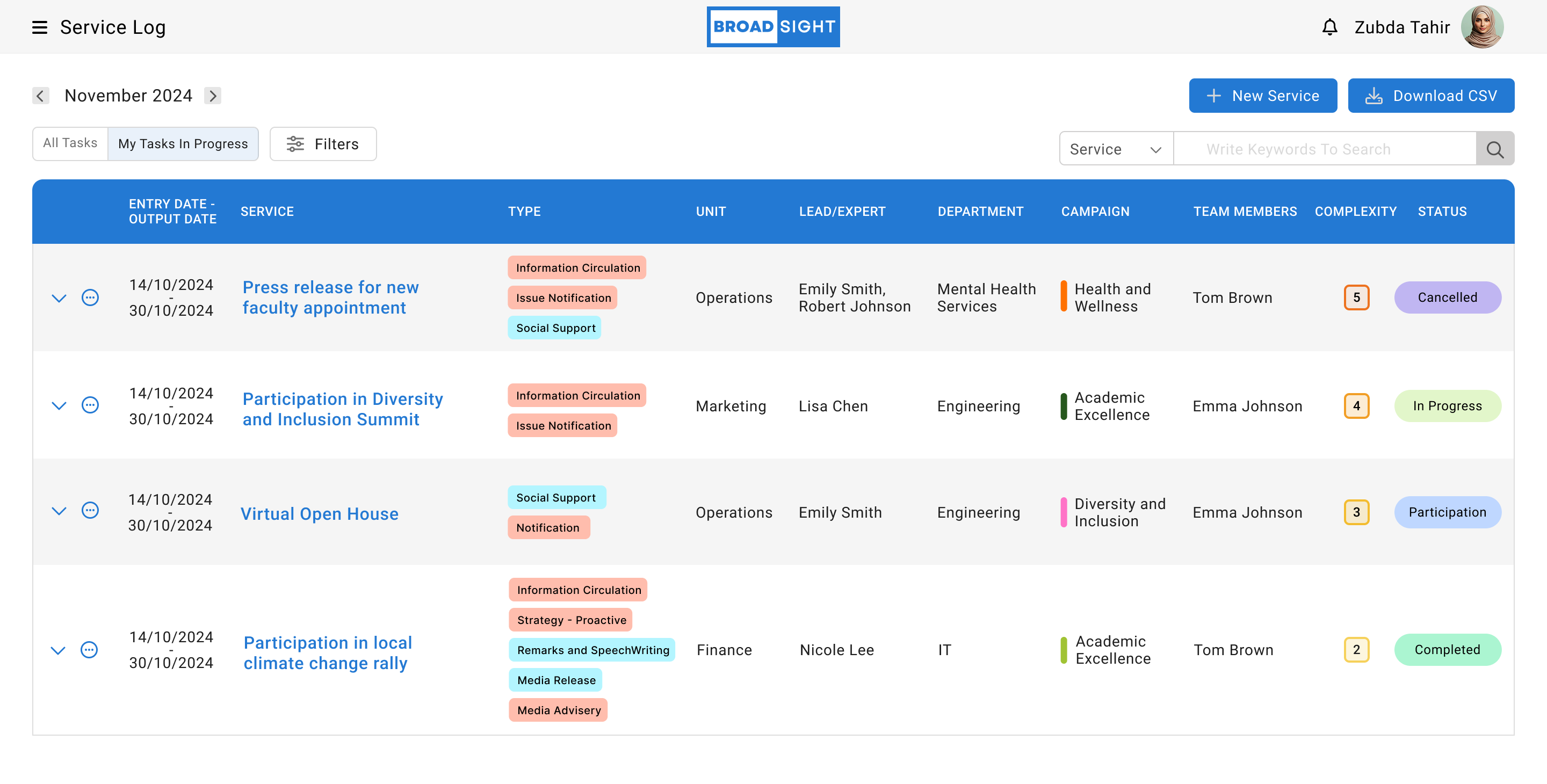
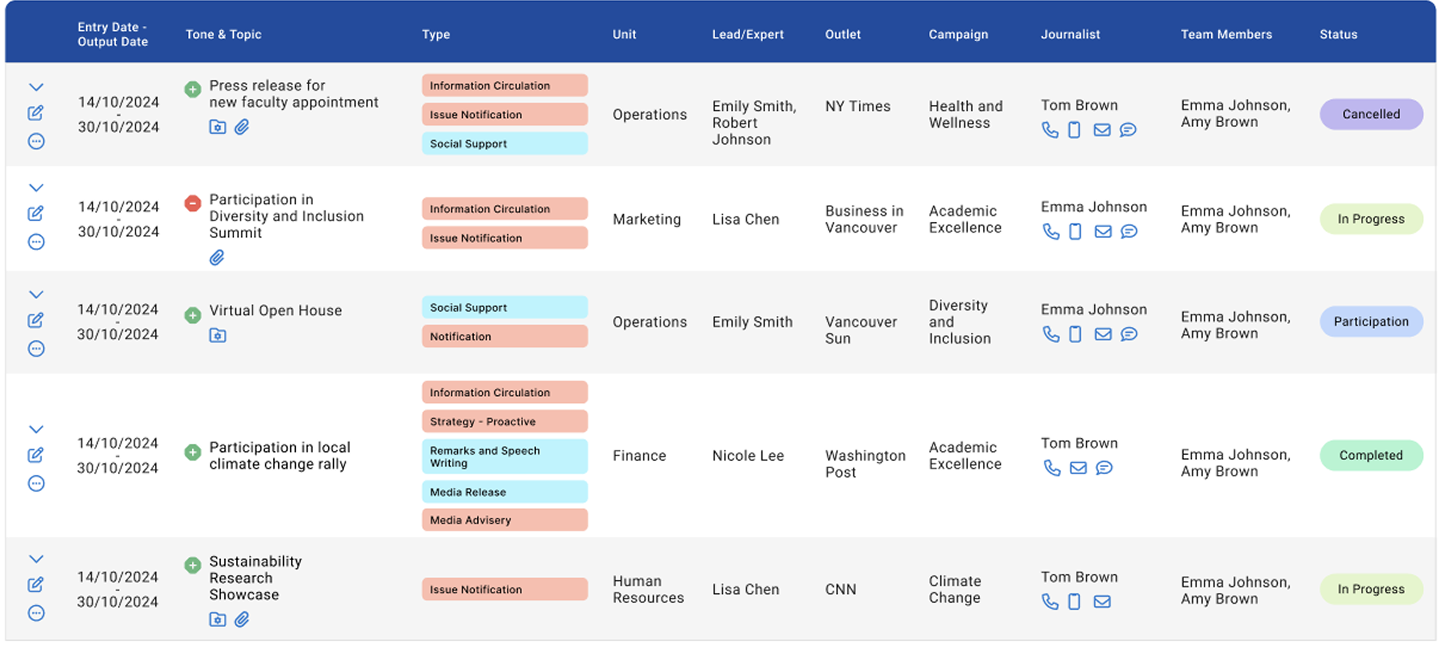
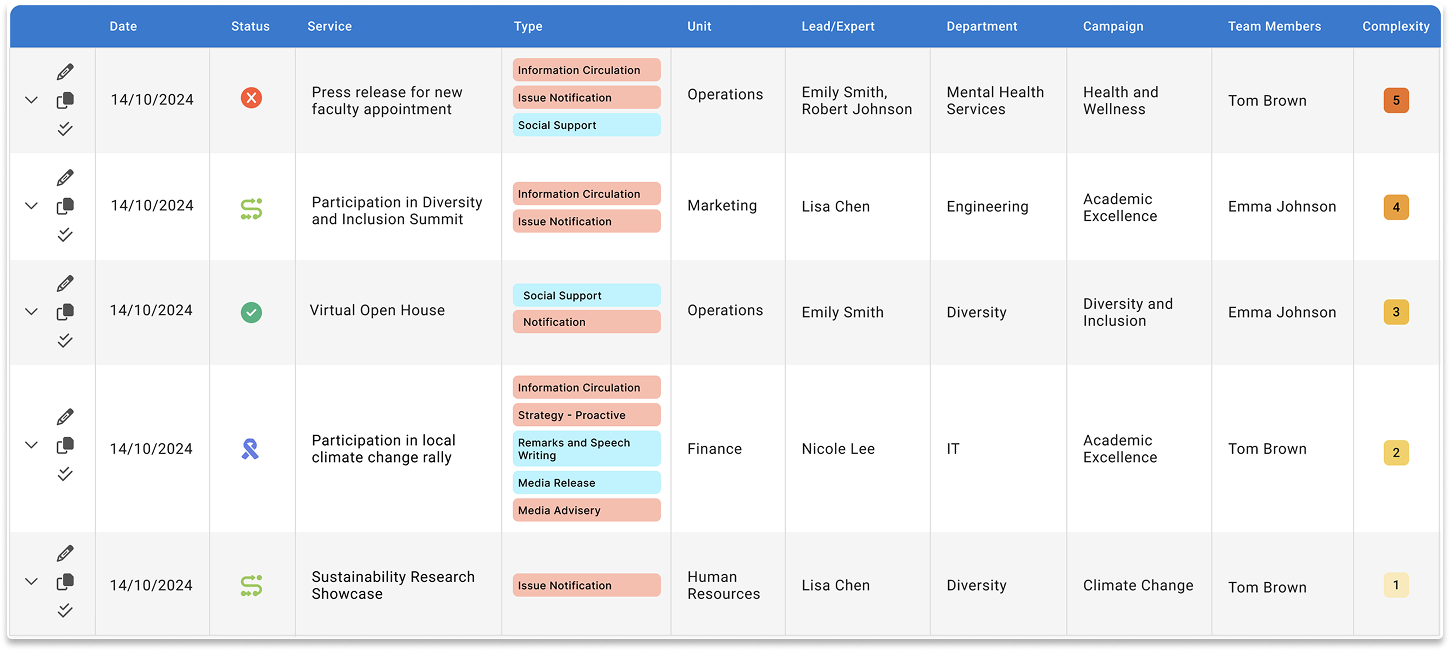
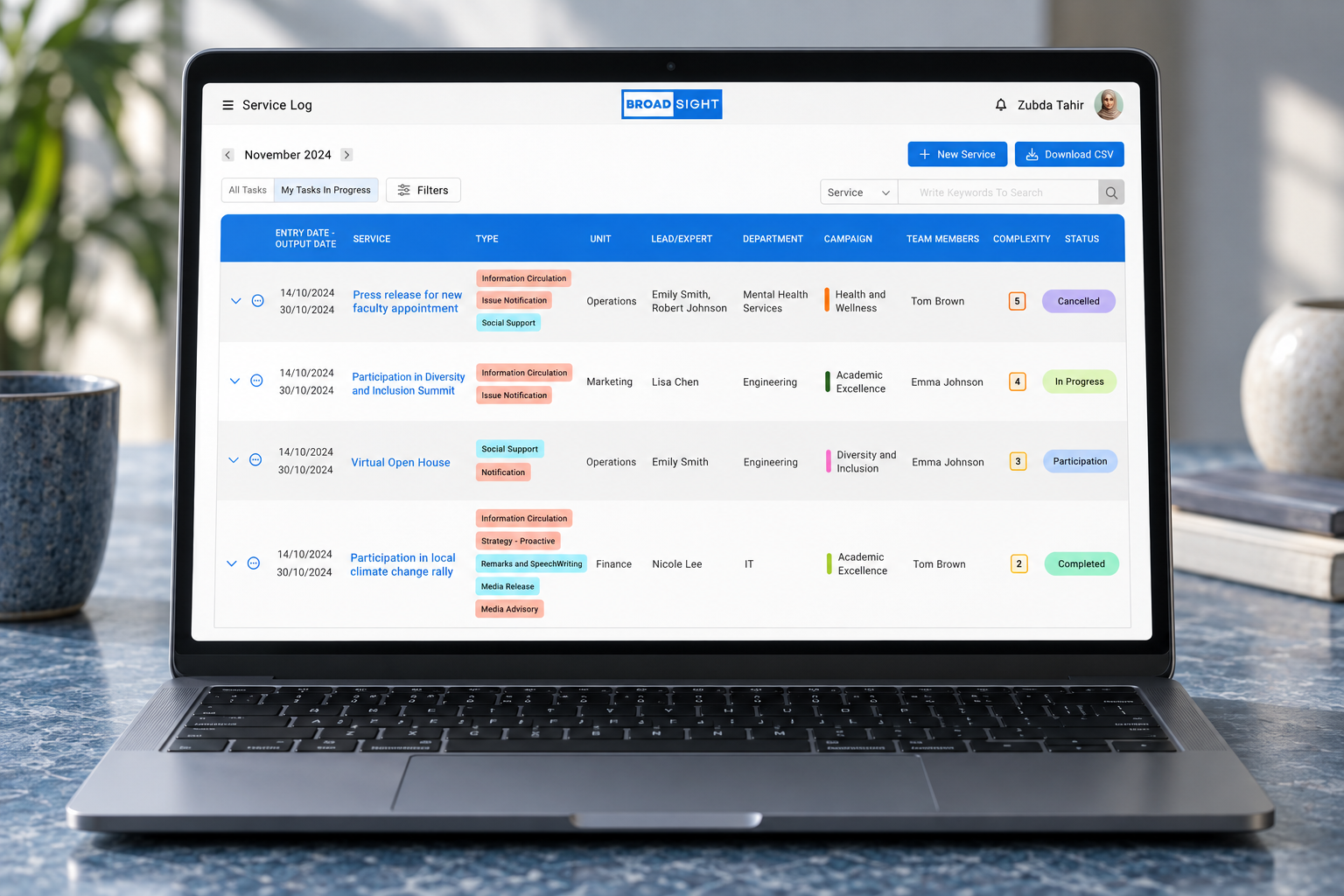
Redesigned Broadsight service log with clear hierarchy, restrained colors, and scannable status
Earlier Broadsight table with dense rows, many competing colors, and expanded details

01 / The starting point

Understanding the problem.

Broadsight held the right information, but its interface made people work to find meaning. Conflicting color, scattered controls, inconsistent patterns, and overloaded tables obscured status, ownership, and next actions across daily media-relations work.

user interviewsinformation hierarchydata-dense interactiondesign systems
The experience I designed for
  1. Find the priority

    Scan topic, ownership, and status.

  2. Reveal the context

    Expand details beside the work.

  3. Take action

    Create and edit in a familiar place.

02 / Research + diagnosis

People needed to see what mattered first.

Interviews with current users revealed what they looked for first: service or topic, status, accountable people, campaign, and complexity.A product audit then exposed the friction around that scan path - unrelated colors competed for attention, actions moved between screens, and expanded details repeated more structure than they clarified.
From research to a design direction
  1. Listen

    Interview people doing the work.

  2. Map the friction

    Connect findings to interface decisions.

  3. Make a direction

    Prioritize a clearer path through the task.

03 / Information system

Give every visual signal one job.

I rebuilt the visual language before polishing individual screens.Blue carries navigation and action; status uses calm, repeatable pills; complexity uses a compact numeric scale; type labels remain distinct without overpowering the row. The component library turned those rules into shared controls, filters, tables, and states.
01

A reusable component language aligned meaning, hierarchy, and implementation

Broadsight design system with buttons, controls, type labels, status colors, and table components
02

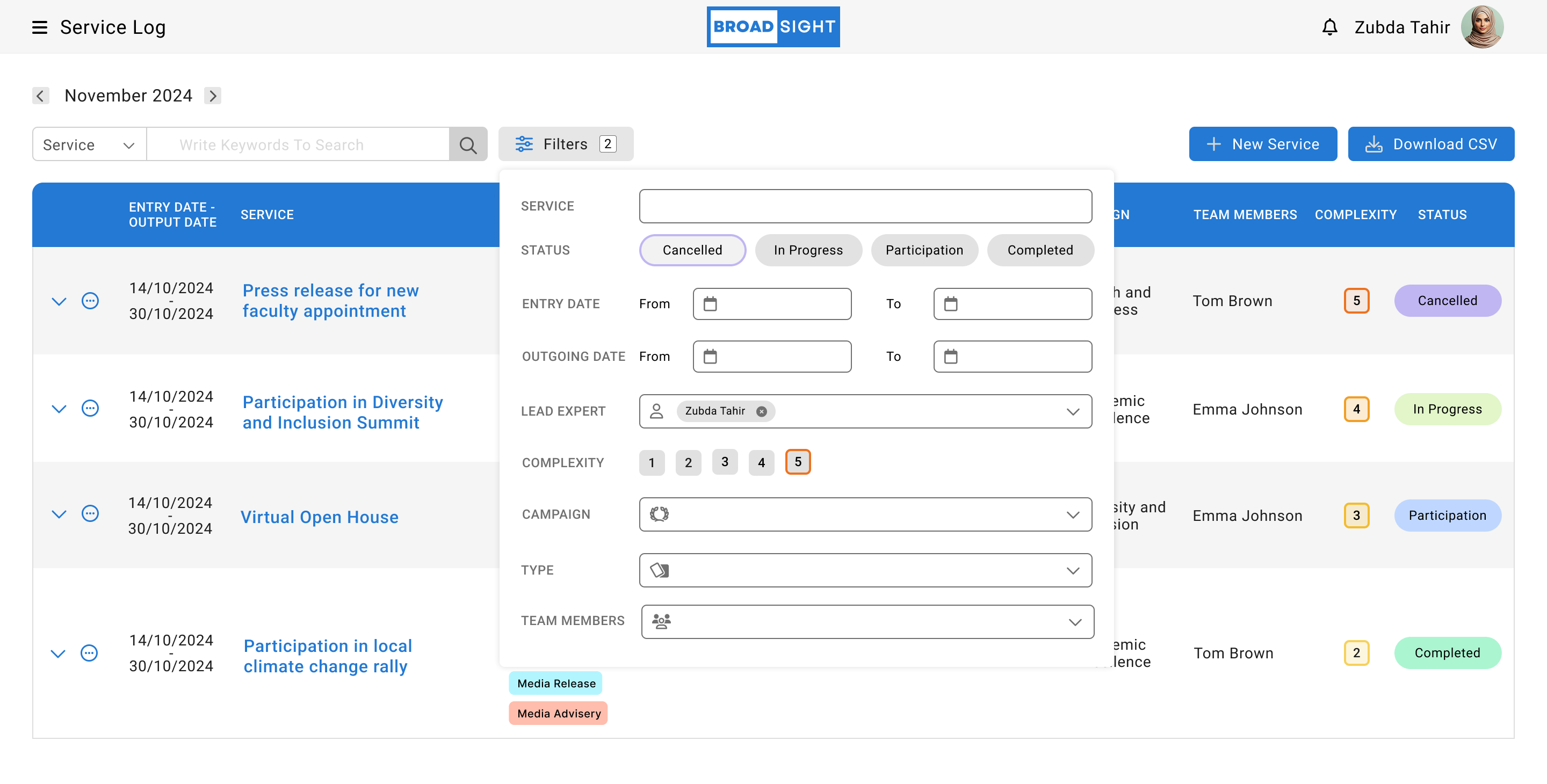
One predictable filter model supports service, status, dates, people, complexity, campaign, and type

Broadsight advanced filter panel over the service log

04 / Core workspace

Make the service log easier to scan.

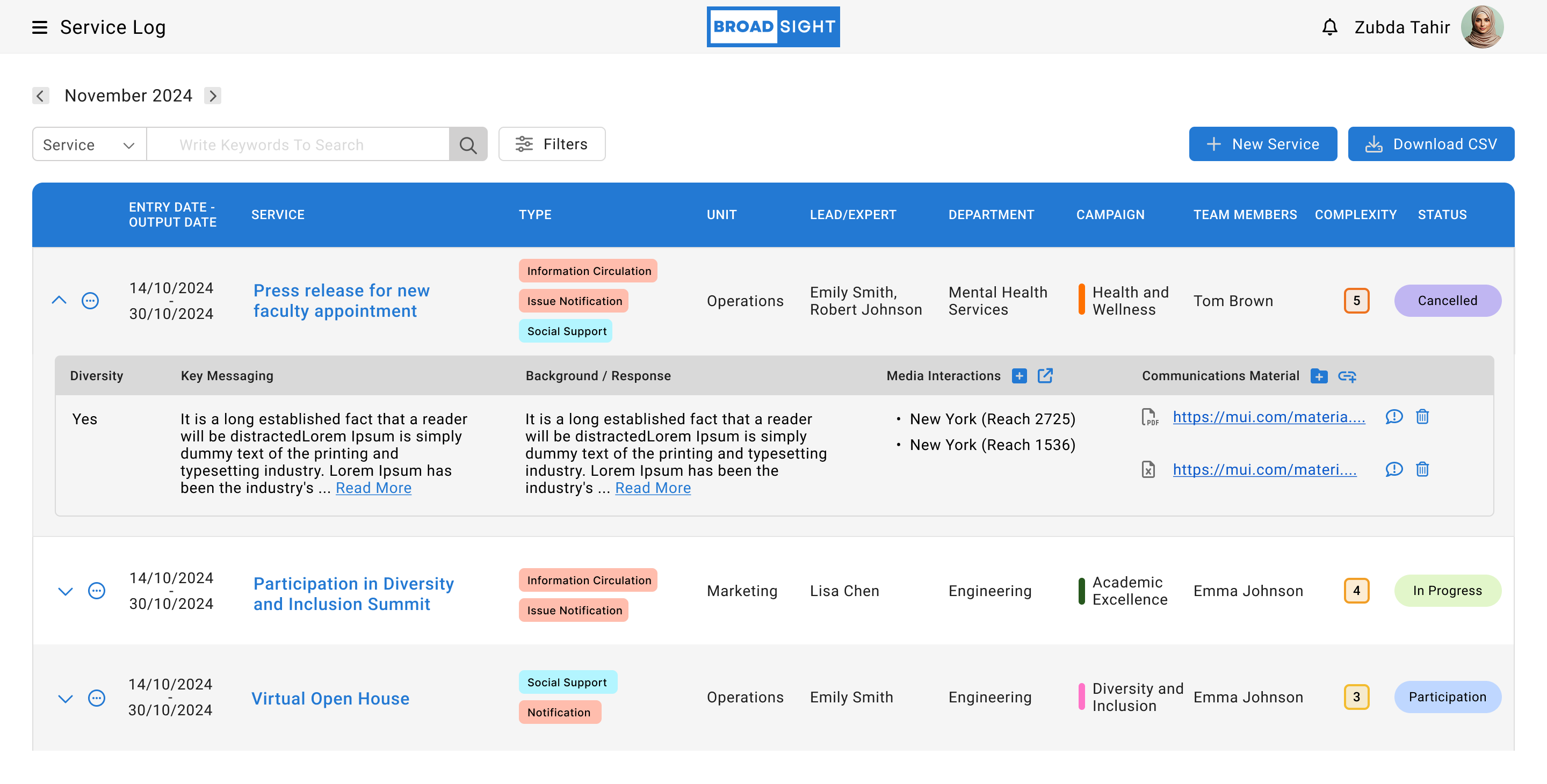
The redesigned log keeps the most decision-relevant fields in a stable left-to-right sequence.Restrained dividers, whitespace, semantic status, and small complexity markers make exceptions visible. Rows expand in place, so users can inspect key messaging, background, media interactions, and communication material without losing their position.
01

The default state supports rapid comparison across active work

Final Broadsight service log with four services and clear status and complexity indicators
02

Progressive disclosure keeps depth available without burdening every row

Expanded Broadsight service row revealing diversity, key messaging, background, media interactions, and files

05 / High-frequency tasks

Keep creation and editing beside the work they affect.

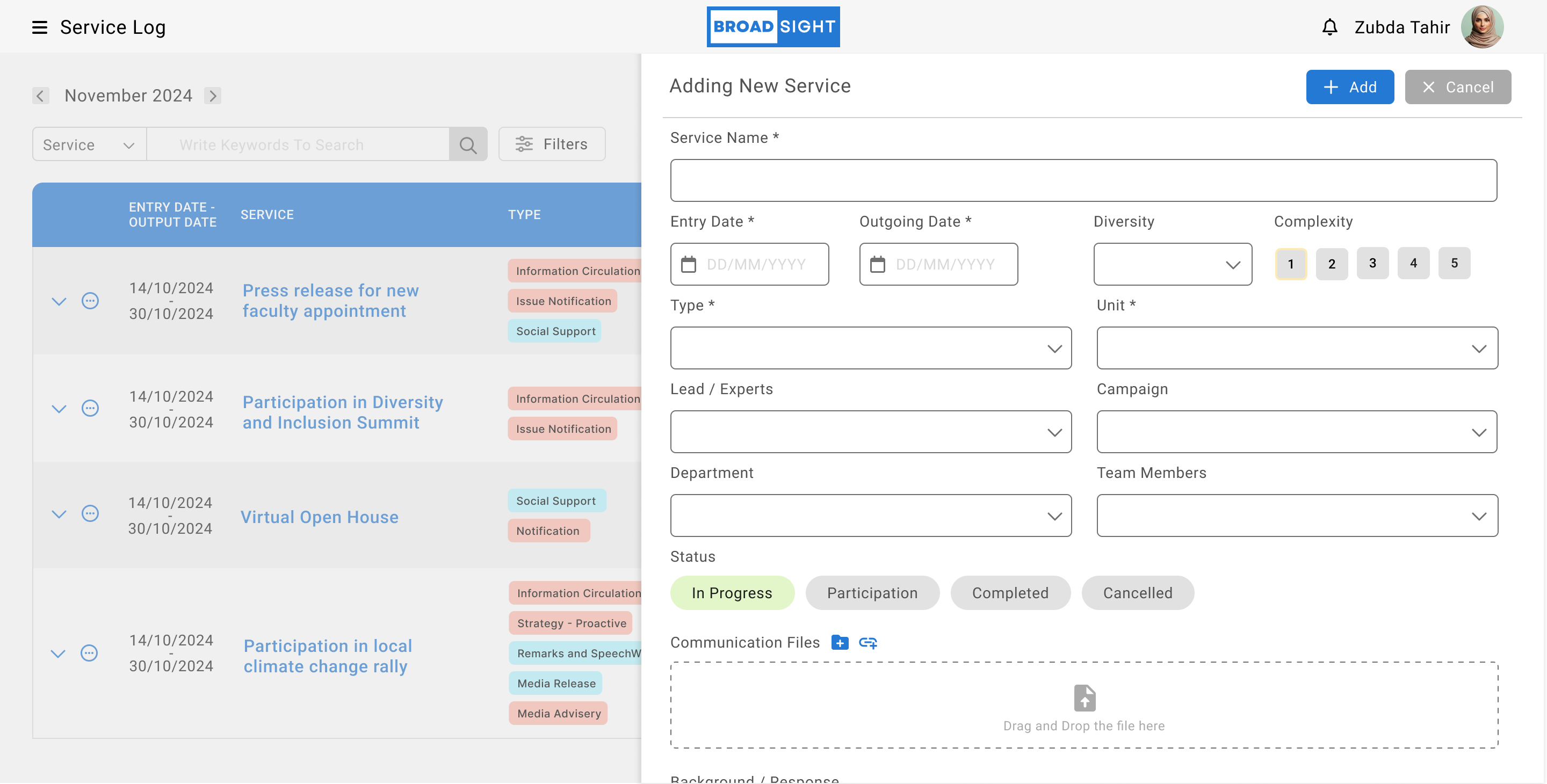
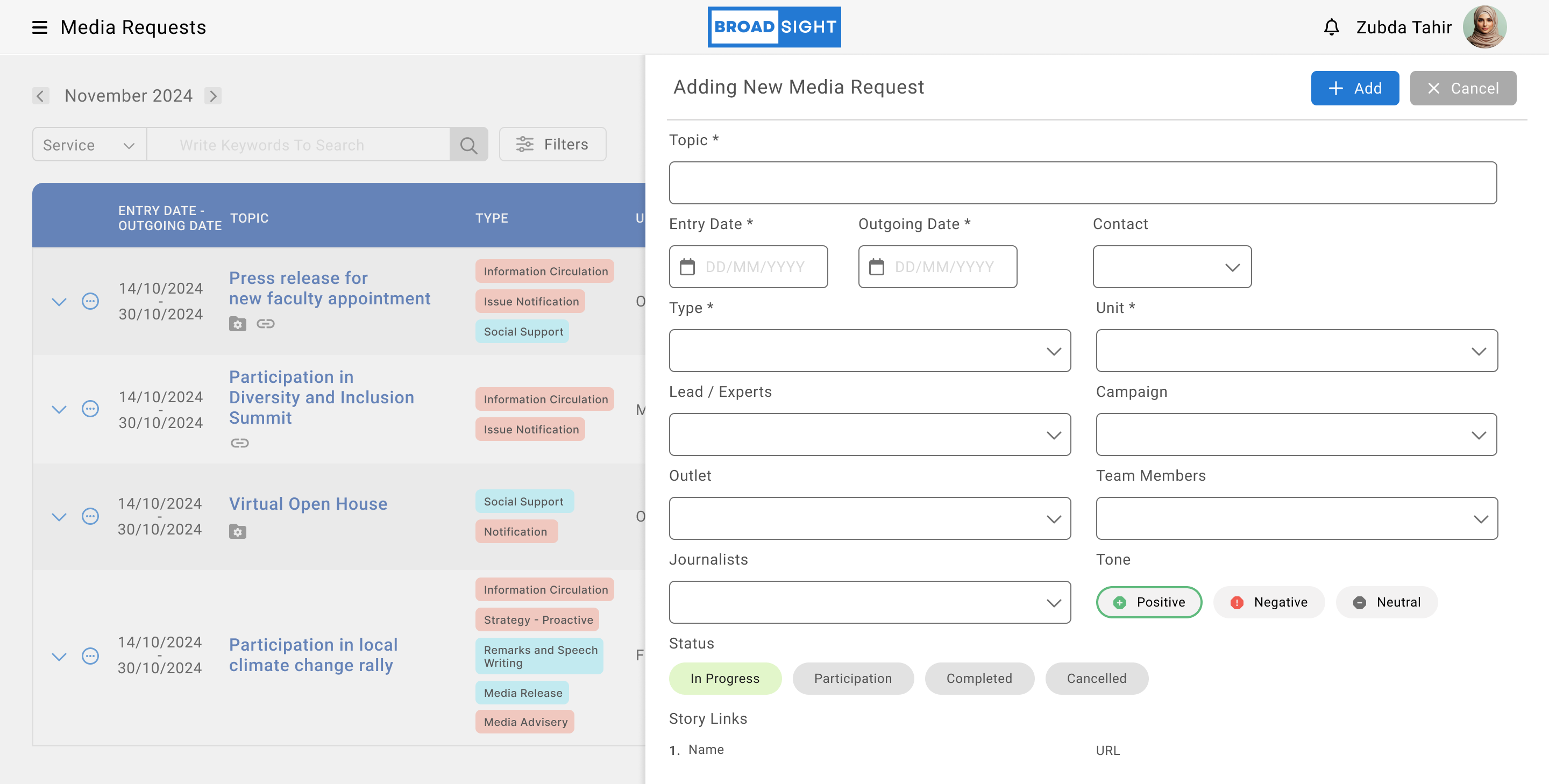
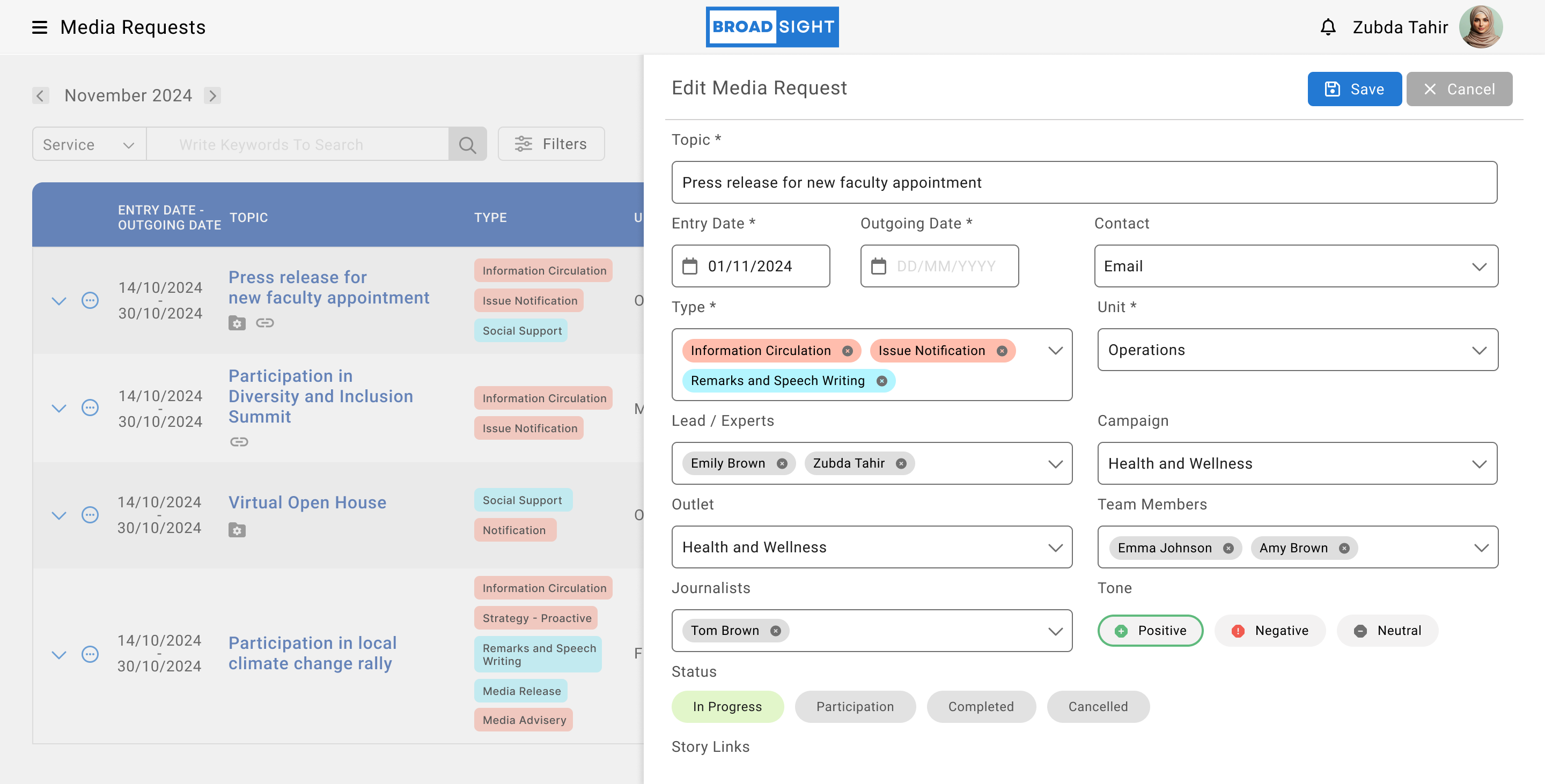
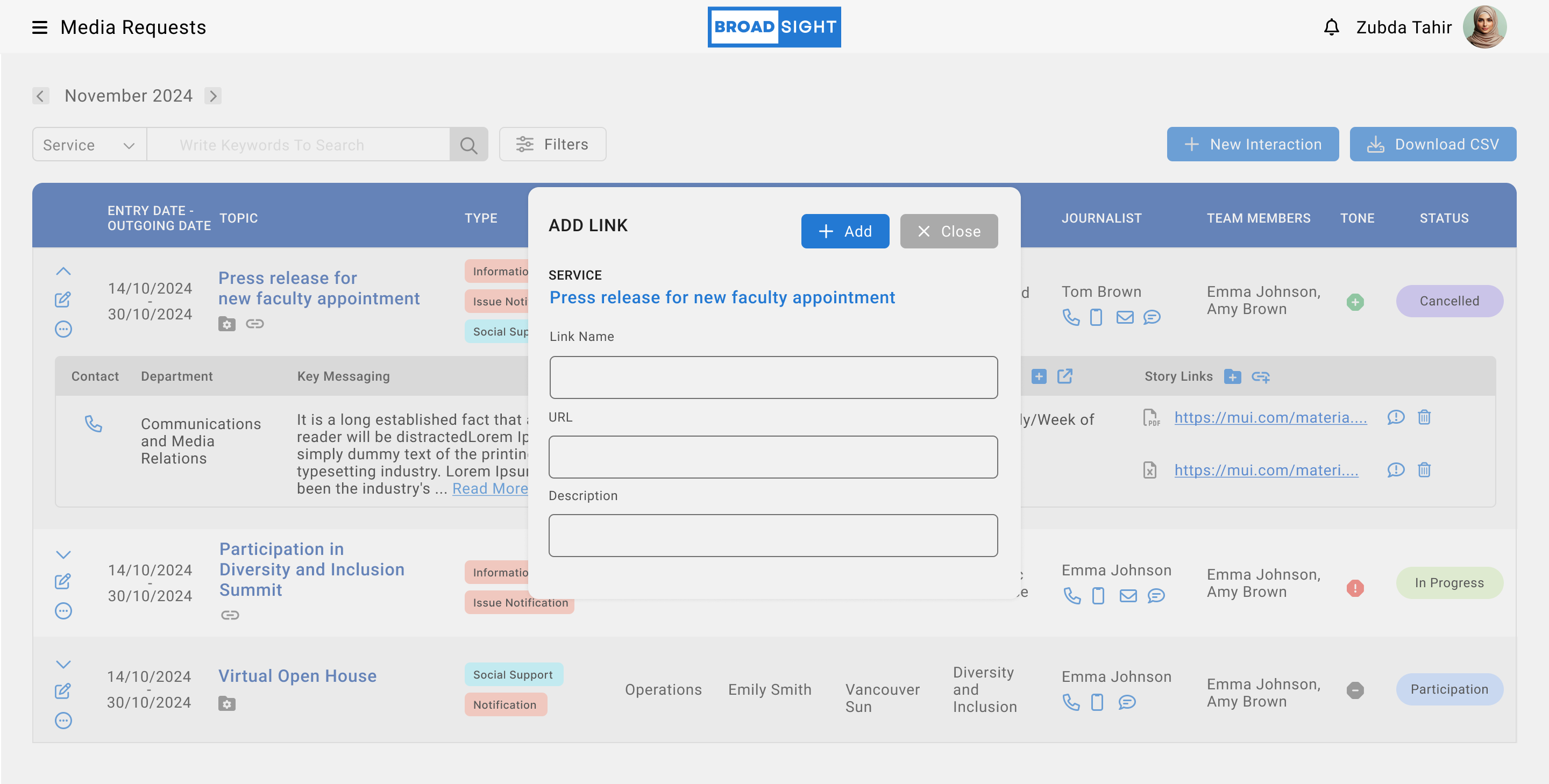
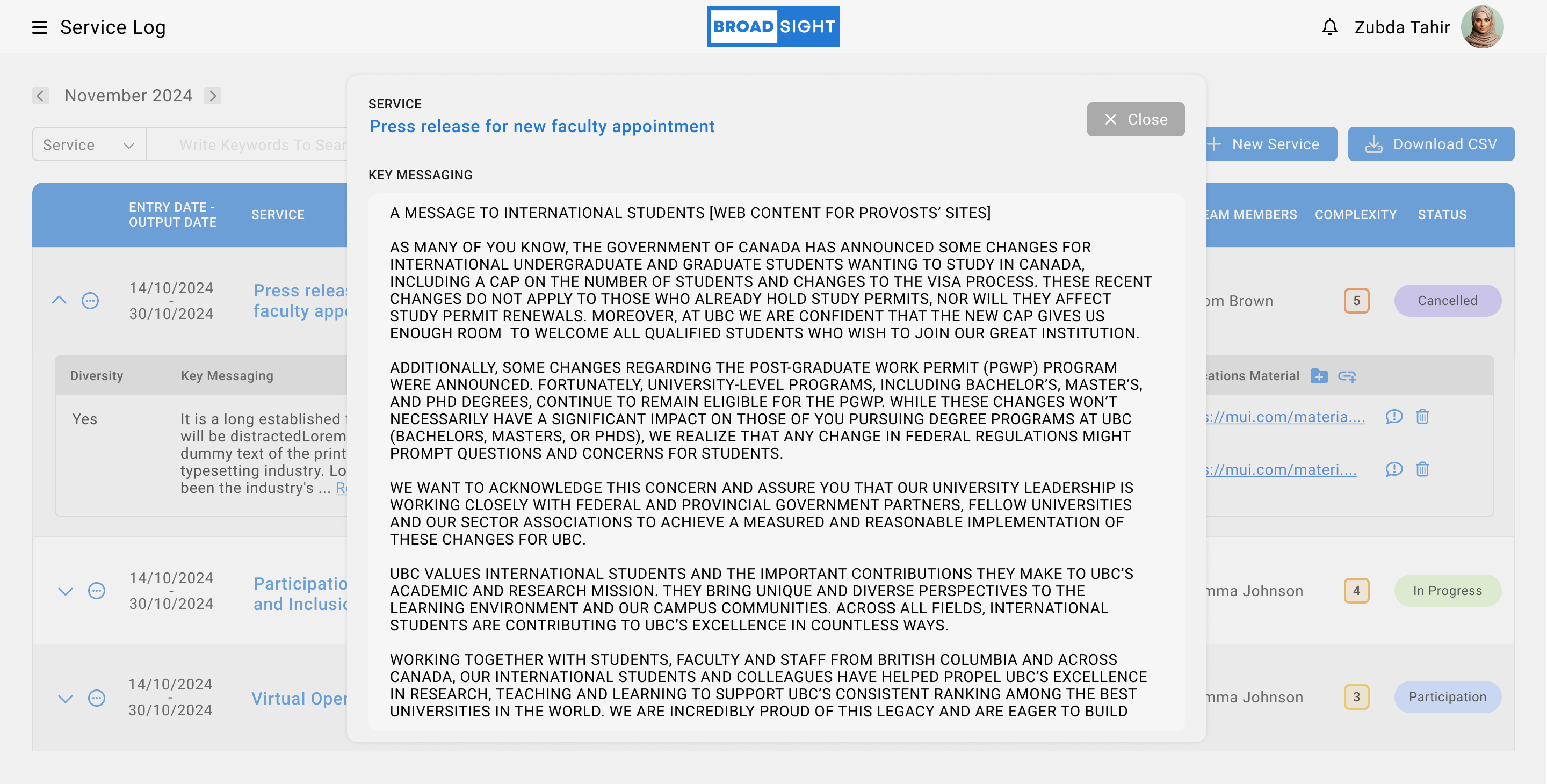
Adding a service or media request and editing an existing request happen in contextual side panels.Users retain the list as orientation while completing structured fields, selecting people, attaching files, or setting status and tone. Focused modals handle links and long key messages without stretching the table beyond usefulness.
01

Add a service without leaving the operational context

Broadsight add-service side panel with structured fields and file upload
02

Create a media request while the working list remains visible

Broadsight add-media-request side panel with topic, dates, people, tone, and status
03

Edit complex request data in a focused, predictable form

Broadsight edit-media-request side panel with people, campaign, tone, and status fields
04

Add supporting links without leaving the request context

Broadsight add-link modal over an expanded media request
05

Long-form content receives a dedicated reading surface

Broadsight modal showing a long key message over the service log

06 / Connected workflows

Extend one interaction language across the product.

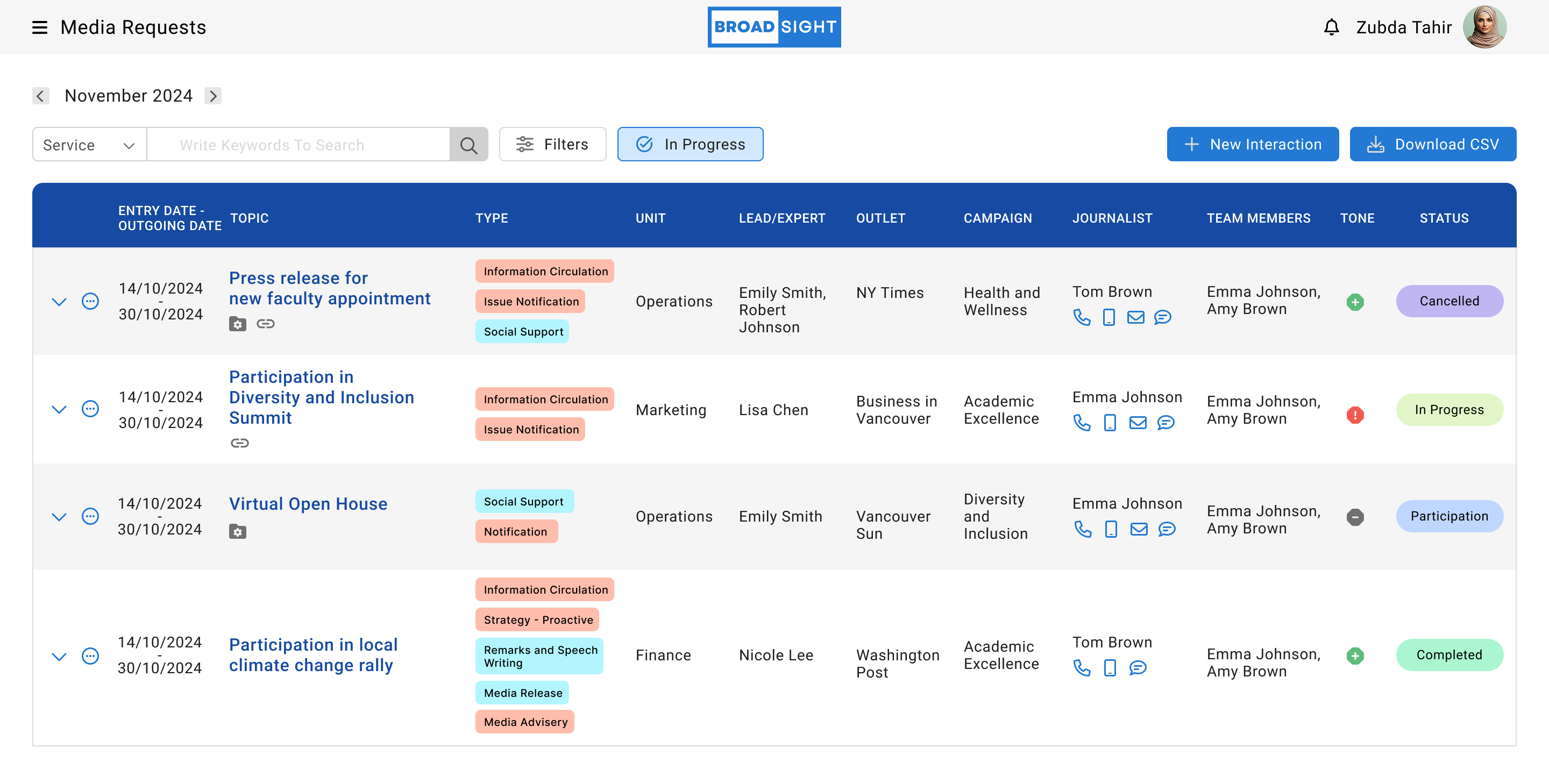
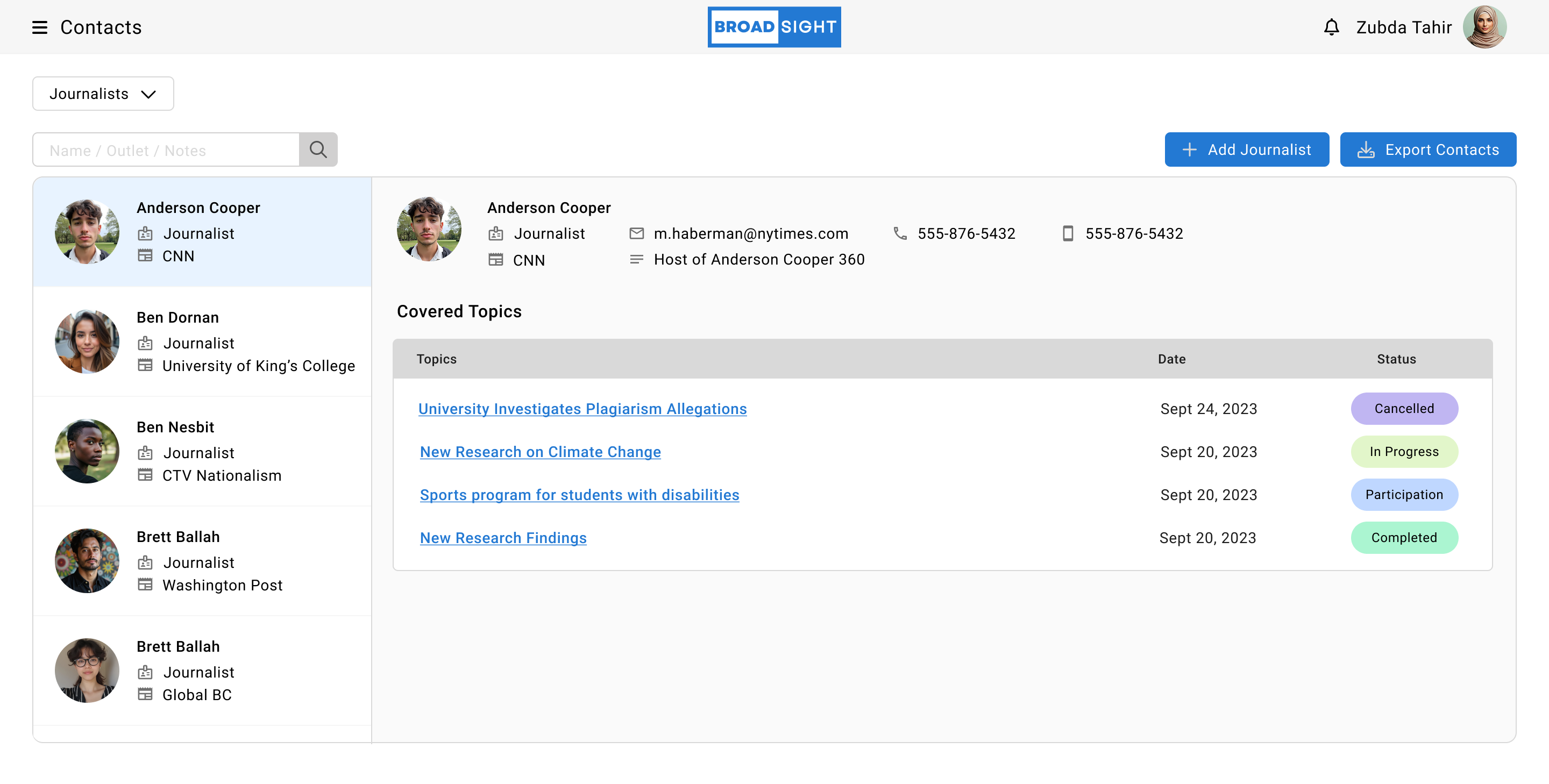
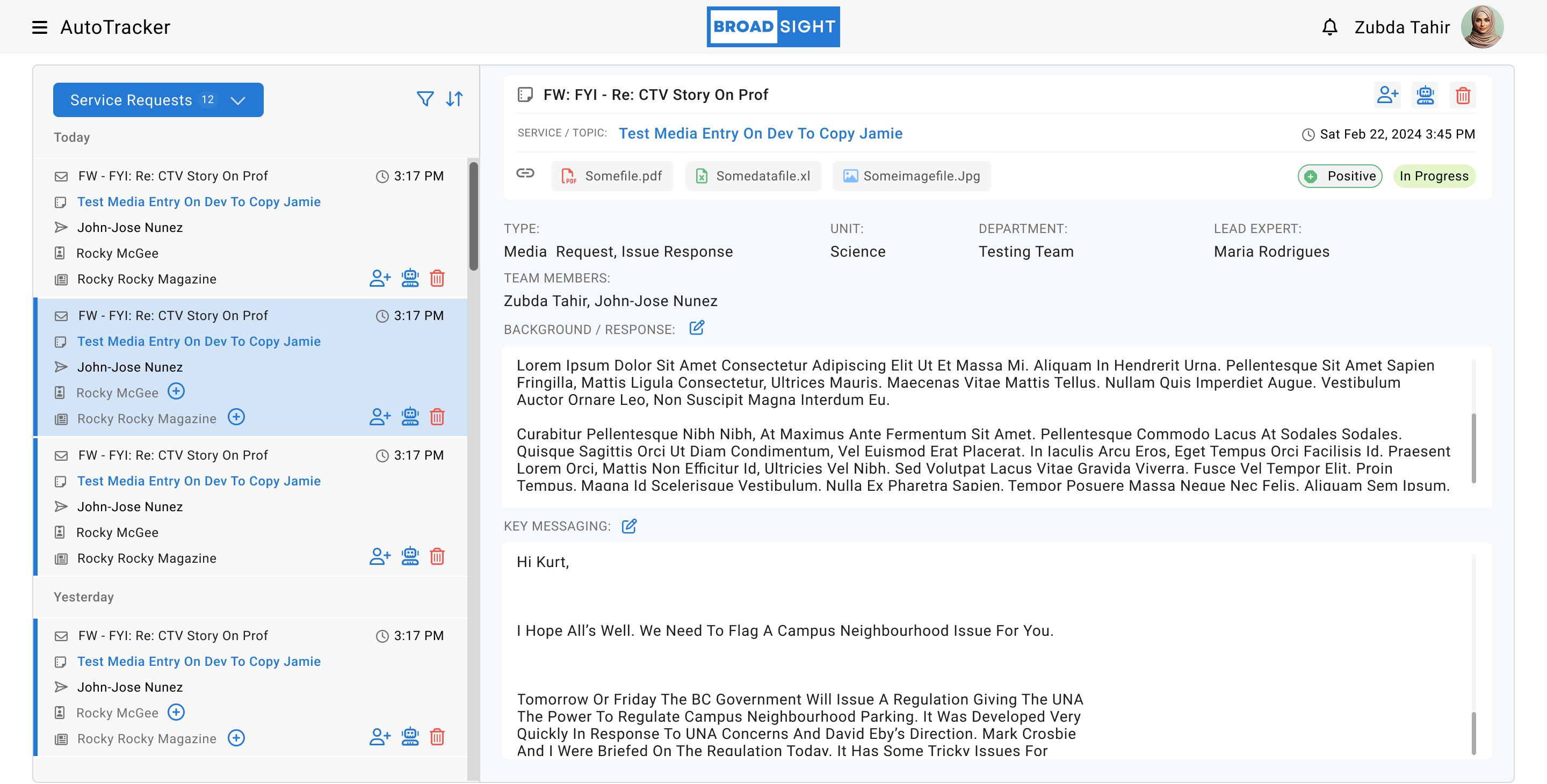
The same hierarchy now links media requests, service records, journalist profiles, and tracked correspondence.Expanded request rows expose story links and contact context; the contacts view connects people to covered topics; AutoTracker joins message content, attachments, ownership, tone, and status in one working record.
01

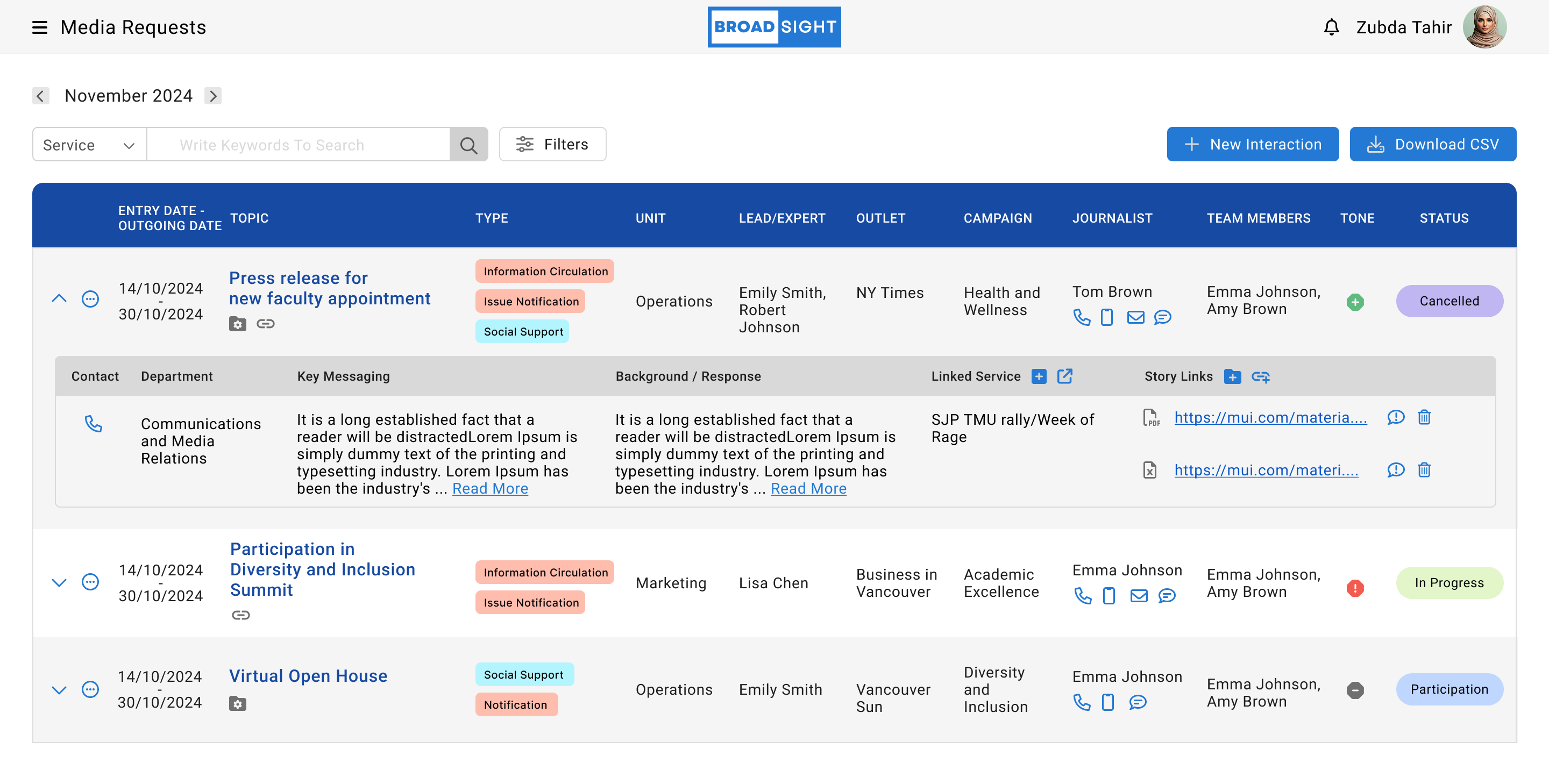
Media requests reuse the scan-first table language

Broadsight media requests table with topic, outlet, campaign, journalists, team, tone, and status
02

Related context appears on demand, in place

Expanded media request showing contact, department, key messaging, linked service, and story links
03

Contacts connect relationship history to active coverage

Broadsight journalist contact profile with contact details and covered topics
04

AutoTracker brings correspondence and structured campaign data together

Broadsight AutoTracker showing a message thread, attachments, ownership, tone, and status

07 / Outcome

A clearer product became easier to use - and easier to grow.

The redesign reduced the effort required to scan, filter, create, and inspect daily work while establishing a system the team could extend across modules.The business reported 25% user growth and an approximately $50K increase in quarterly revenue. The durable contribution was not one cleaner table, but a shared product language for future workflows.

Keep exploring · 04

TrackITBack to all projectsSay hello